Warning sign
Cracks in walls, ceilings or brick
A crack is a record of movement. The useful questions are where it runs, whether it is getting longer and what sits underneath it.
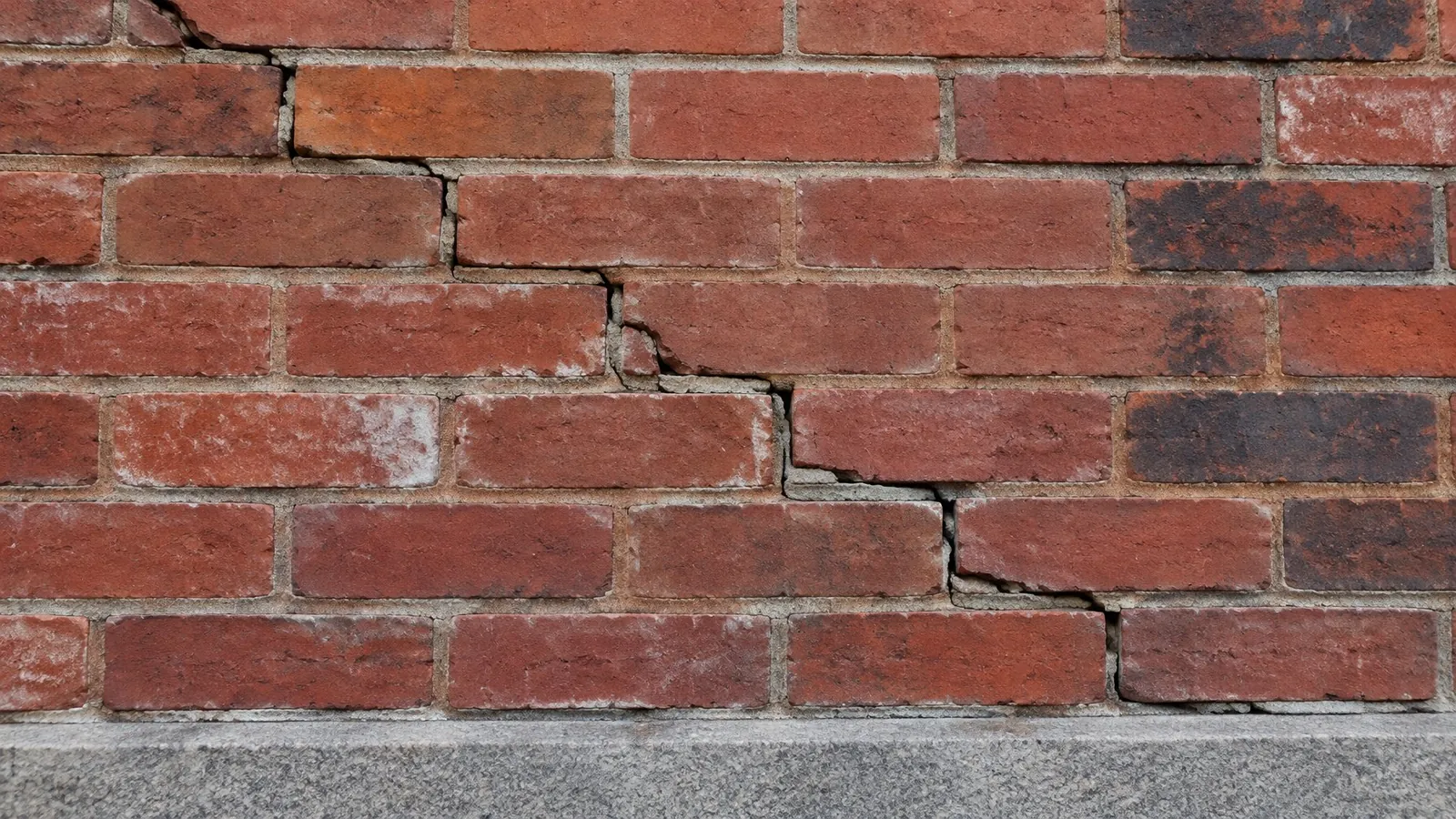
What to look for
Patterns that deserve a closer look
Most cracks in an old Boston house are cosmetic. Lath and plaster moves with every heating season, and thin, straight lines along a ceiling joint usually say more about the plaster than about the ground. These patterns are different:
- Stair-step cracks in brick that climb through the mortar joints, often starting near a corner or a window.
- Diagonal cracks that run up and away from the corner of a door or window opening.
- A crack that tapers, wide at one end and closed at the other, which shows that one part of the wall has dropped or rotated.
- Cracks that return a season or two after they were filled and painted.
- A matching set: the same line showing on the outside brick and on the plaster inside, or on two floors one above the other.
Before anything is patched, draw a short pencil mark across each end of the crack and write the date beside it. In three months you will know if it has grown, and so will whoever inspects it.
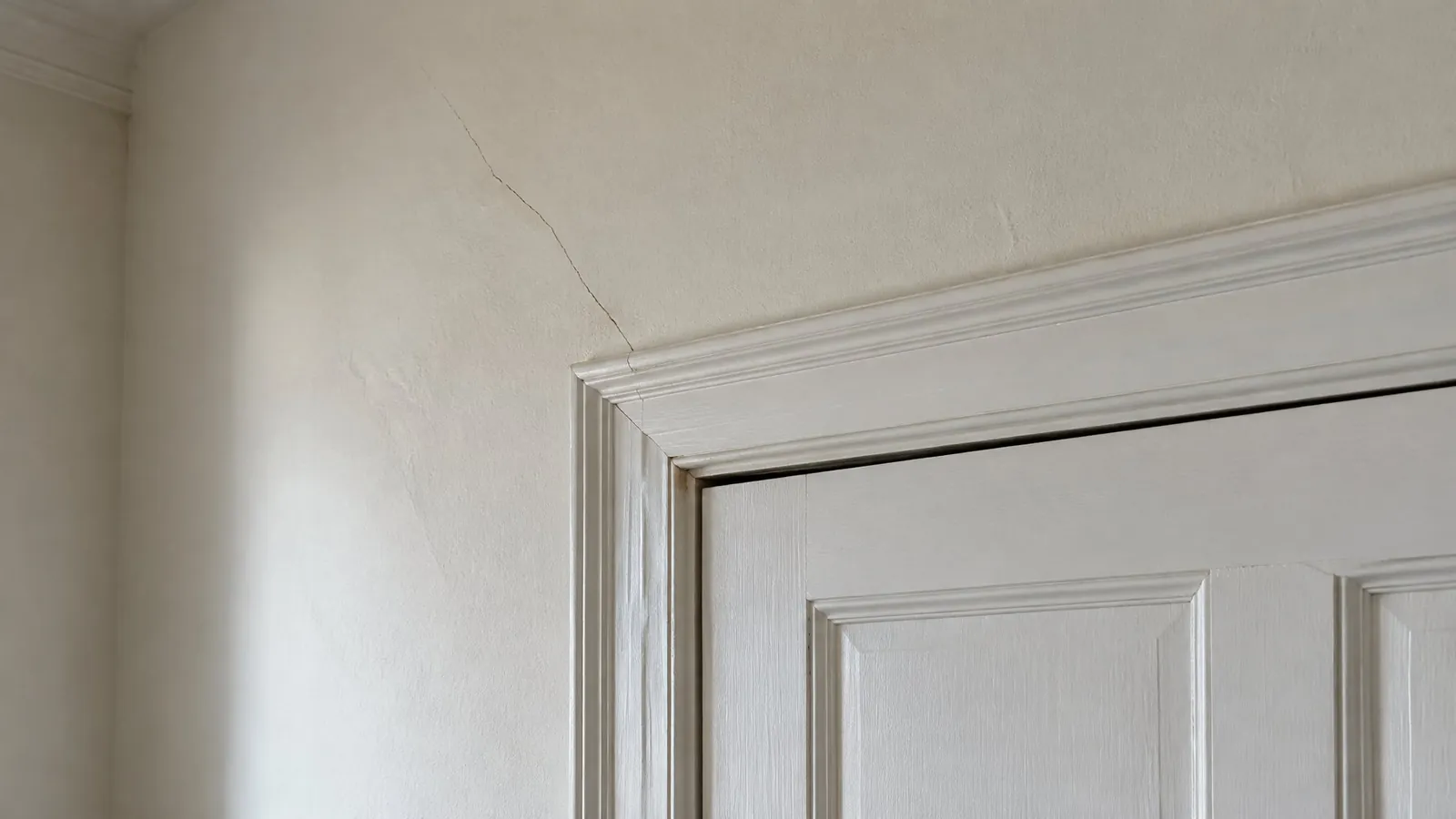
Not always the foundation
Other things that crack walls
Plaster
Age and dry winter air
Old plaster on wood lath shrinks and loosens. Fine cracks that follow the lath lines or the edges of a patch, and that stay the same width for years, are a plasterer's job.
Brick
Rusting steel over windows
The steel lintel that carries brick over an opening swells as it rusts and lifts the courses above it. The result looks like a stair-step crack but starts at the window head, and a mason repairs it.
Water
Leaks and frost in the wall
Water that gets behind brick through open joints freezes, pushes faces off and stains plaster inside. Repointing and flashing solve that. The foundation may be untouched.
At the inspection
What a foundation company checks
The person who inspects will follow each crack down to see what it lines up with: a foundation corner, a basement post, a place where a downspout empties. They measure the width, note which side has moved, and check the floors and door frames nearby for the same lean.
In a row house they will also ask about the party walls, since two houses share them and a crack there concerns both owners. Where movement is suspected but not proven, a company may fit small crack gauges and read them again after a few months.
If it is the foundation
What repair can involve
When a section of foundation has settled, the usual proposal is to support that section on piers that reach firmer ground, then repair the masonry above once movement has stopped. The piers and the alternatives are described in the guide to repair methods.
Filling the crack is the last step. Brick repointed over a foundation that is still moving opens again along the same line.
Questions about wall cracks
How wide does a crack have to be before it matters?
No single width settles it. A narrow crack that doubles in a year tells more than a wide one that has not changed since the house was painted. Width, direction, growth and what else is happening nearby are read together, which is why a measured inspection is worth more than a rule of thumb.
The crack is in a wall I share with the house next door. Who deals with it?
Start with your own side and let the neighbor know. A party wall carries both houses, so an inspection is more useful when both owners allow access, and any repair to the wall itself will need both to agree.
Can I just have the brick repointed?
If a mason finds the mortar has simply weathered, yes. If the joints have opened because the wall below has moved, repointing hides the evidence for a while and the crack comes back. Have the cause looked at first.
Foundation repair in Boston
Have a Boston foundation company take a look
Give the street, the kind of building and what has changed. The company settles a day to visit, and afterwards you receive its written account of the cause and what it would charge.
Ready to have it looked at?
Phone and say what you have seen. The firm on the other end is a Boston-area foundation repair company, independent of this website, and it can book a visit to your home.
Call (617) 555-0111You speak with an independent company, not with this website. See the referral disclosure.