Warning sign
Sloping, sagging or bouncy floors
Few floors in a hundred-year-old Boston house are level. What matters is the direction of the slope and whether it is still changing.
Which way does it run?
Three kinds of uneven floor
Toward the middle
A sag along the center of the house
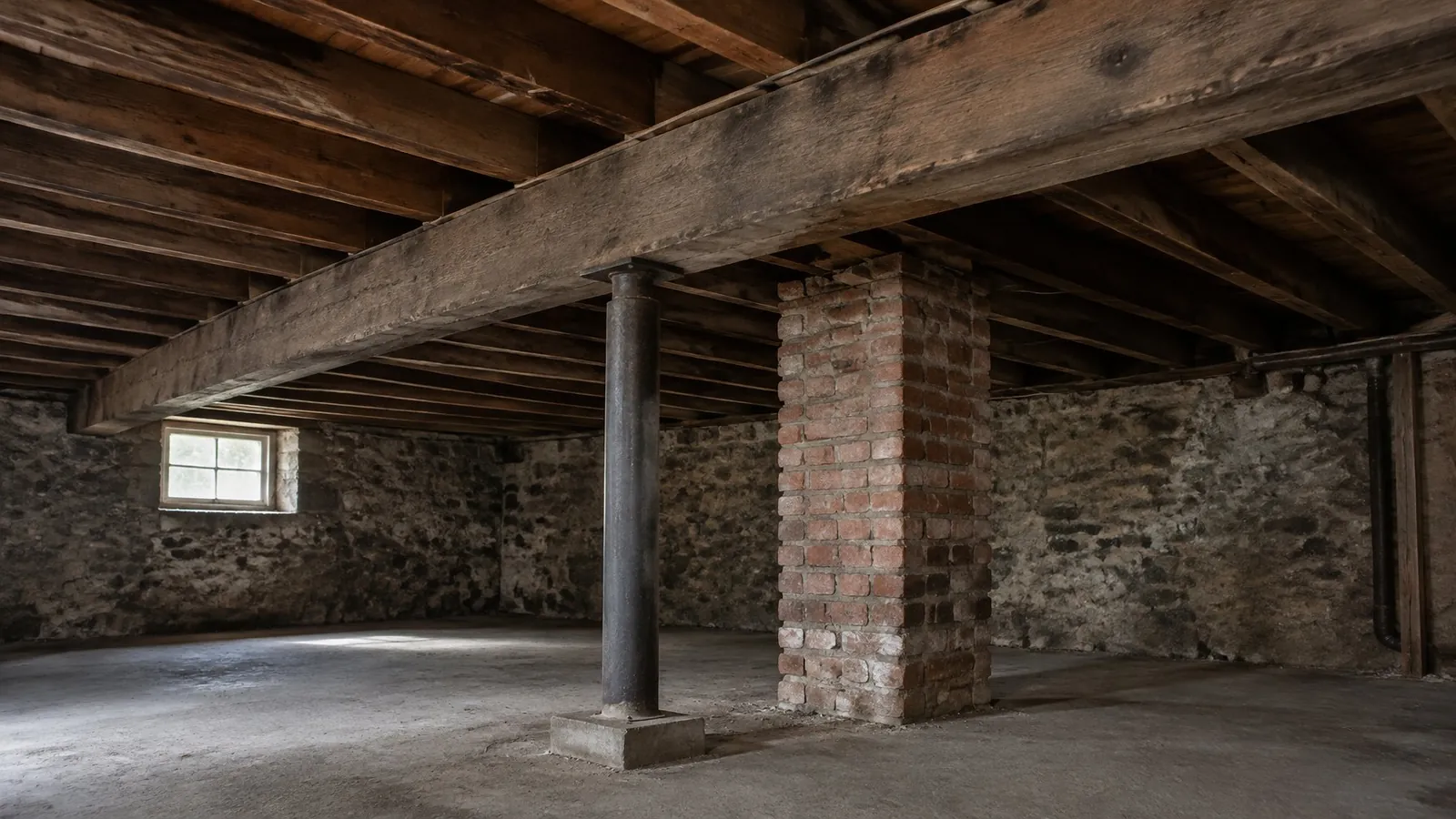
Floors that fall from the outside walls toward a hallway or stair usually follow the main beam below. The cause is found in the basement: posts, the beam they carry, or the pads under them.
Toward one wall
A tilt to the outside
When a whole room leans toward an exterior wall or one corner, that side of the foundation may have settled. Look for matching cracks in the wall and at the corner outside.
Level but lively
Bounce without slope
A floor that is flat but shakes the china cabinet when someone walks past has joists that are long, light or notched. That is a framing question and seldom involves the ground.
Old or active?
How to tell a settled slope from a moving one
A slope that finished moving decades ago leaves clues. Door heads have been trimmed to match it, baseboards were scribed to the floor long ago, and the paint over the old gaps is unbroken.
A slope that is still going shows fresh evidence: a new gap under the baseboard, a line of clean wood where a door has started to rub, tile grout that has cracked across a room, or a crack in the plaster that was not there last year.
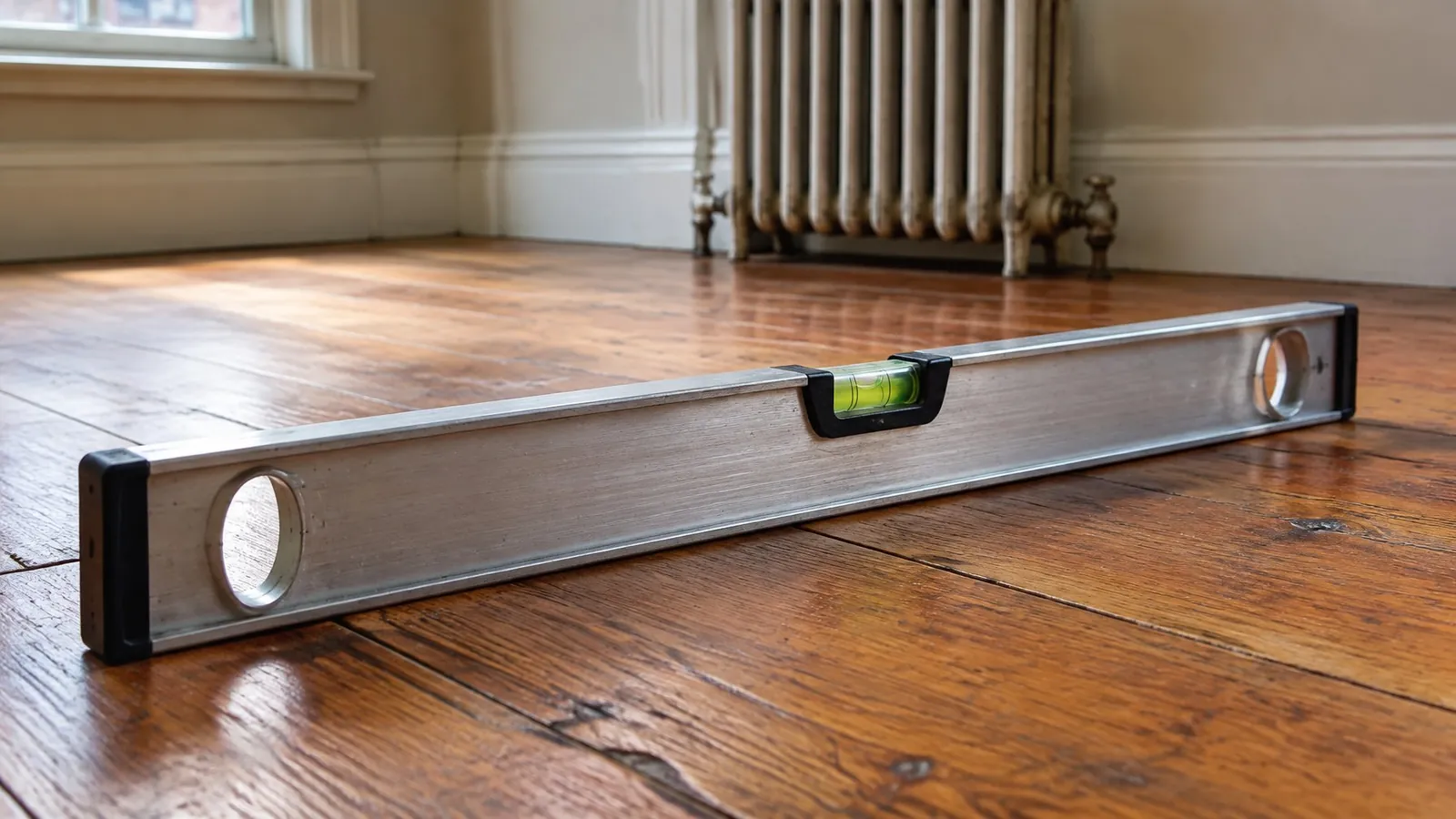
You can measure it yourself. Set a long level on the floor in the same spot twice a year, note how far one end must be raised to center the bubble, and keep the numbers with the date.
At the inspection
What a company checks under the floor
- The main beam: is it straight, cracked, or crushed where it bears on a post?
- Each post and what it stands on. Wood posts on a damp floor rot from the bottom. Temporary screw jacks left in place for years are a sign of an earlier, unfinished repair.
- The sill, the timber that sits on top of the foundation wall, for rot and insect damage.
- Joist ends, notches cut for old plumbing, and any wall that was removed upstairs during a renovation.
- Floor heights across each room, taken with a level so the pattern can be mapped.
Some Boston houses have a rear addition or porch built over a shallow crawl space instead of a full basement. The same checks apply there, with more attention to dampness and to footings that may not reach below the frost.
What comes next
What repair can involve
Proposals range from adding steel columns on new concrete footings, to doubling up weak joists, to replacing a rotted sill, to piers at the perimeter if the foundation itself has dropped. The methods guide explains each in plain terms.
Ask how far the company intends to raise the floor. Lifting an old house back toward level is done slowly, and lifting too far cracks plaster and binds doors on the floors above. Many repairs aim to stop the movement and recover only part of the slope.
Questions about uneven floors
The floors have sloped since we bought the house years ago. Is that a problem?
Often it is simply the shape the house took long ago. If nothing has changed in the time you have lived there, and doors and plaster are stable, there may be nothing to repair. An inspection is worth having if you notice new movement or before you renovate over it.
Can sloping floors be made level again?
Sometimes, and often only in part. How much can be recovered depends on what caused the slope, how long the framing has held that shape and how much disturbance to finishes you will accept. A company should say in writing what it expects to achieve.
Who is responsible in a rented triple-decker?
The owner of the building. If you are a tenant, report it to the landlord in writing with photos. If you are the landlord, the call is yours to make.
Foundation repair in Boston
Have a Boston foundation company take a look
Give the street, the kind of building and what has changed. The company settles a day to visit, and afterwards you receive its written account of the cause and what it would charge.
Ready to have it looked at?
Phone and say what you have seen. The firm on the other end is a Boston-area foundation repair company, independent of this website, and it can book a visit to your home.
Call (617) 555-0111You speak with an independent company, not with this website. See the referral disclosure.