Local page
Foundation repair in Dorchester
Dorchester has rock ledge, glacial hills and low shoreline, with triple-deckers built across all three. Knowing which is under your house is the first step.
Three kinds of ground
What a Dorchester house may be standing on
Ledge
Puddingstone at the surface
The U.S. Geological Survey notes that Roxbury puddingstone crops out widely in Dorchester. You can see it in yards and road cuts. A foundation set straight on rock does not settle, but a house with one end on ledge and the other on soil can crack where the two meet.
Hills
Glacial till
Meeting House Hill is one of the drumlins on the Survey's list, built of dense stony clay. Till is firm ground. On the slopes, look instead at the downhill foundation wall, any retaining wall and where storm water runs.
Shoreline
Low and filled land
The city's climate studies describe a low waterfront edge along Dorchester Bay and the Neponset River, and Columbia Point is filled land. Softer, wetter ground like this is where settlement is more likely.
The local house
Triple-deckers and their weak points
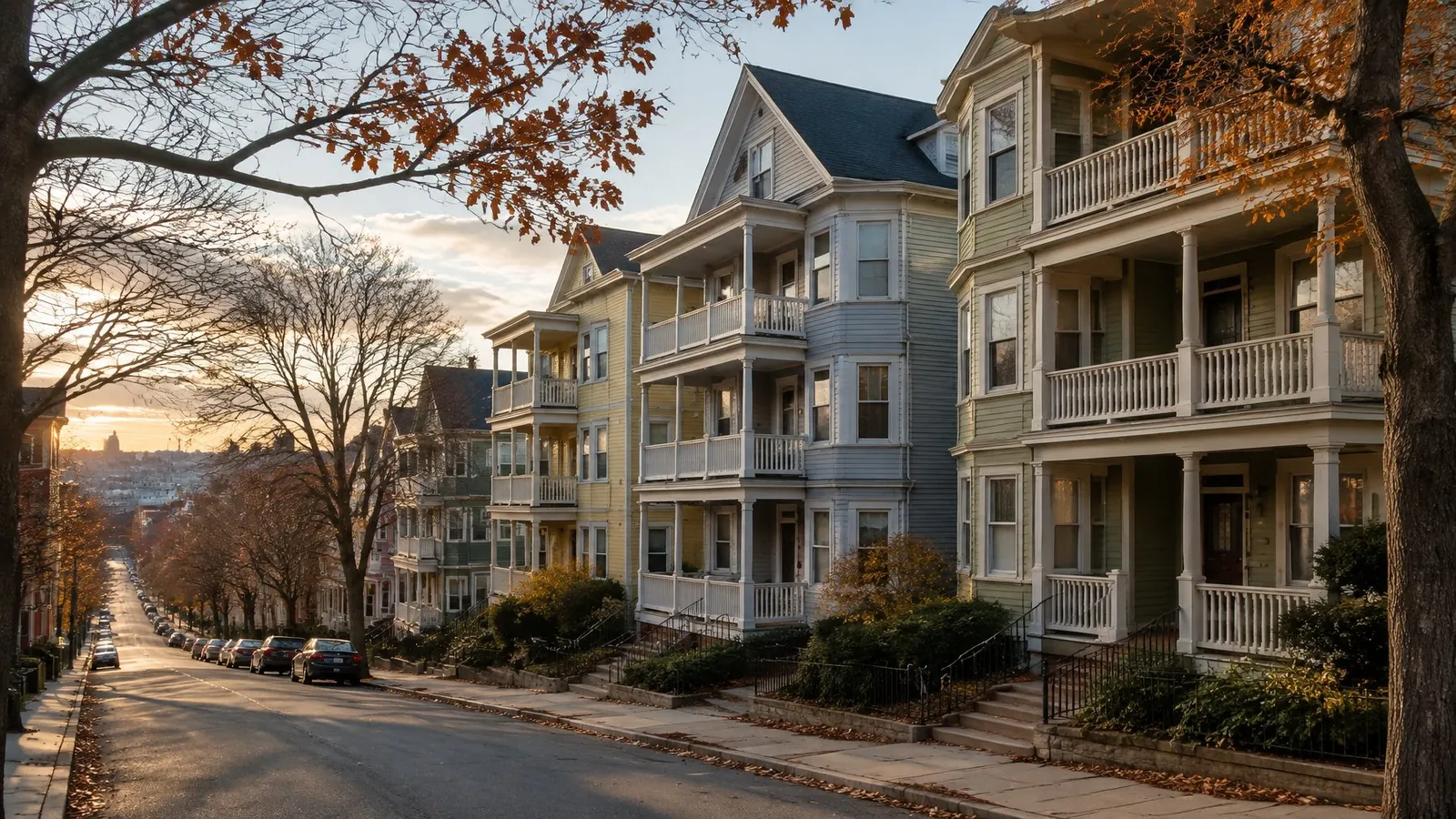
The City of Boston dates its triple-deckers from the 1880s through the 1930s. They share a plan: three flats stacked on a stone, brick or concrete basement, with porches stacked at the front or back.
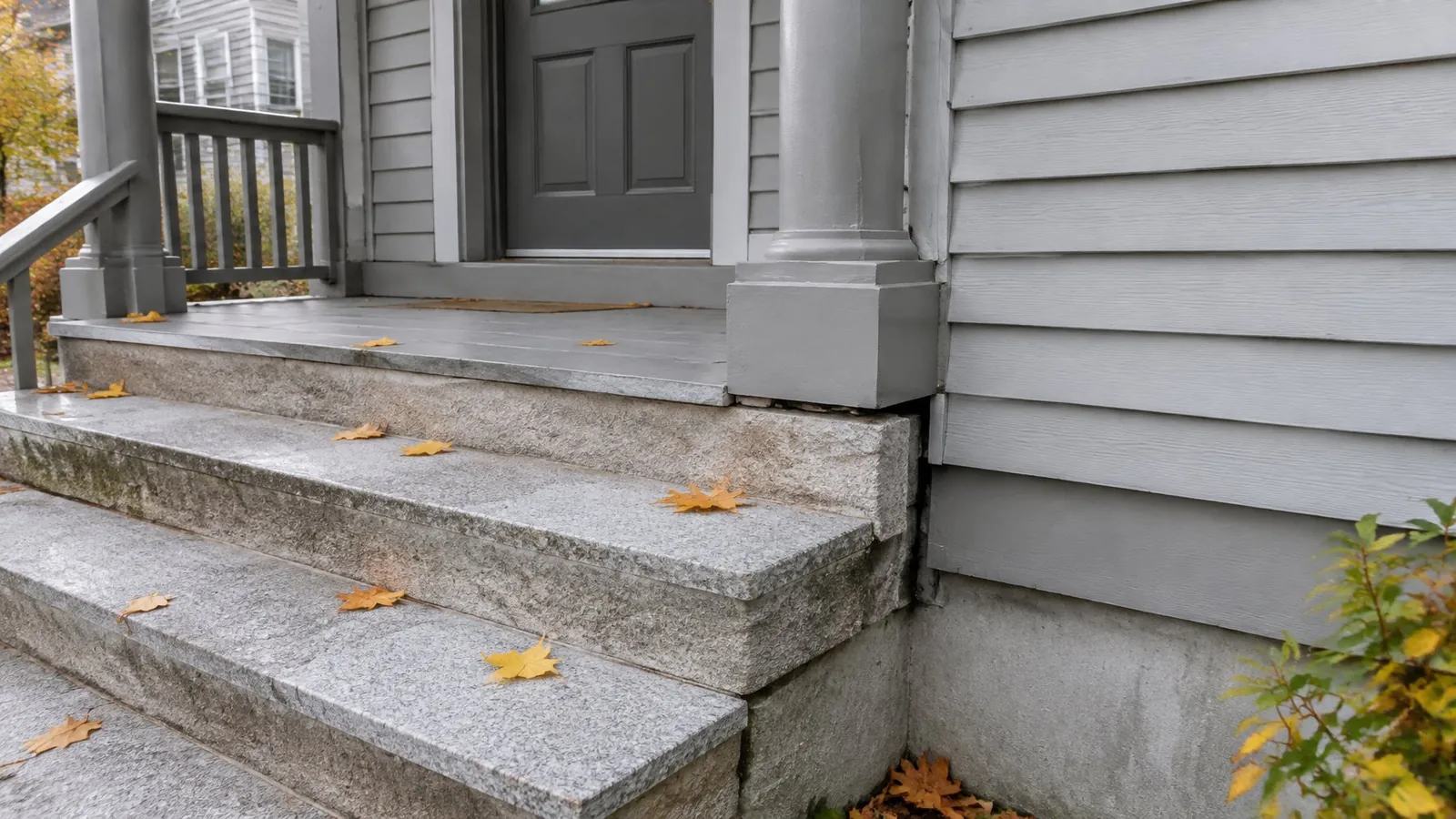
Two parts of that plan account for many of the calls. Inside, the floors lean on a line of posts down the middle of the basement, and when a post base decays all three floors dip toward the center. Outside, the porch stacks stand on their own small footings and move with the frost. The pages on sloping floors and porches and steps go into each.
Rules
Permits when three households share a building
Structural repair anywhere in Boston goes on a long form permit from Inspectional Services. For three-family buildings there is an added rule: the city says the owner of a unit in a building with three or more dwellings must hire a licensed contractor, and gives a floor of a three-decker as its example.
If the building is a condominium, the foundation, the basement posts and usually the porches are common property. Get the association's agreement before an inspection is booked so that whoever comes can reach every part of the basement.
Questions from Dorchester
There is rock showing in my yard. Is that good for the foundation?
Rock is the firmest thing a house can stand on. The question is whether the whole house reaches it. Ask the inspector to note where the basement wall meets ledge and whether any cracks line up with that point.
My street is steep and the crack is in the downhill wall. Why there?
On a slope the downhill wall is usually the tallest part of the foundation, and rain running down the hill ends up around the house. Either can open a crack there. An inspection will measure whether the wall has leaned or the corner has dropped.
We live near the Neponset and the basement is damp every spring. Is the foundation at risk?
Damp by itself is a drainage or waterproofing matter, which is another trade. It becomes a foundation question if you also see new cracks, a floor that has dropped or a wall that has moved.
Foundation repair in Boston
Have a Boston foundation company take a look
Give the street, the kind of building and what has changed. The company settles a day to visit, and afterwards you receive its written account of the cause and what it would charge.
Ready to have it looked at?
Phone and say what you have seen. The firm on the other end is a Boston-area foundation repair company, independent of this website, and it can book a visit to your home.
Call (617) 555-0111You speak with an independent company, not with this website. See the referral disclosure.