Guide
Looking after a foundation
Most of what protects a foundation happens above ground and costs an afternoon. Here is a routine built around a New England year.
Through the year
Four seasonal checks
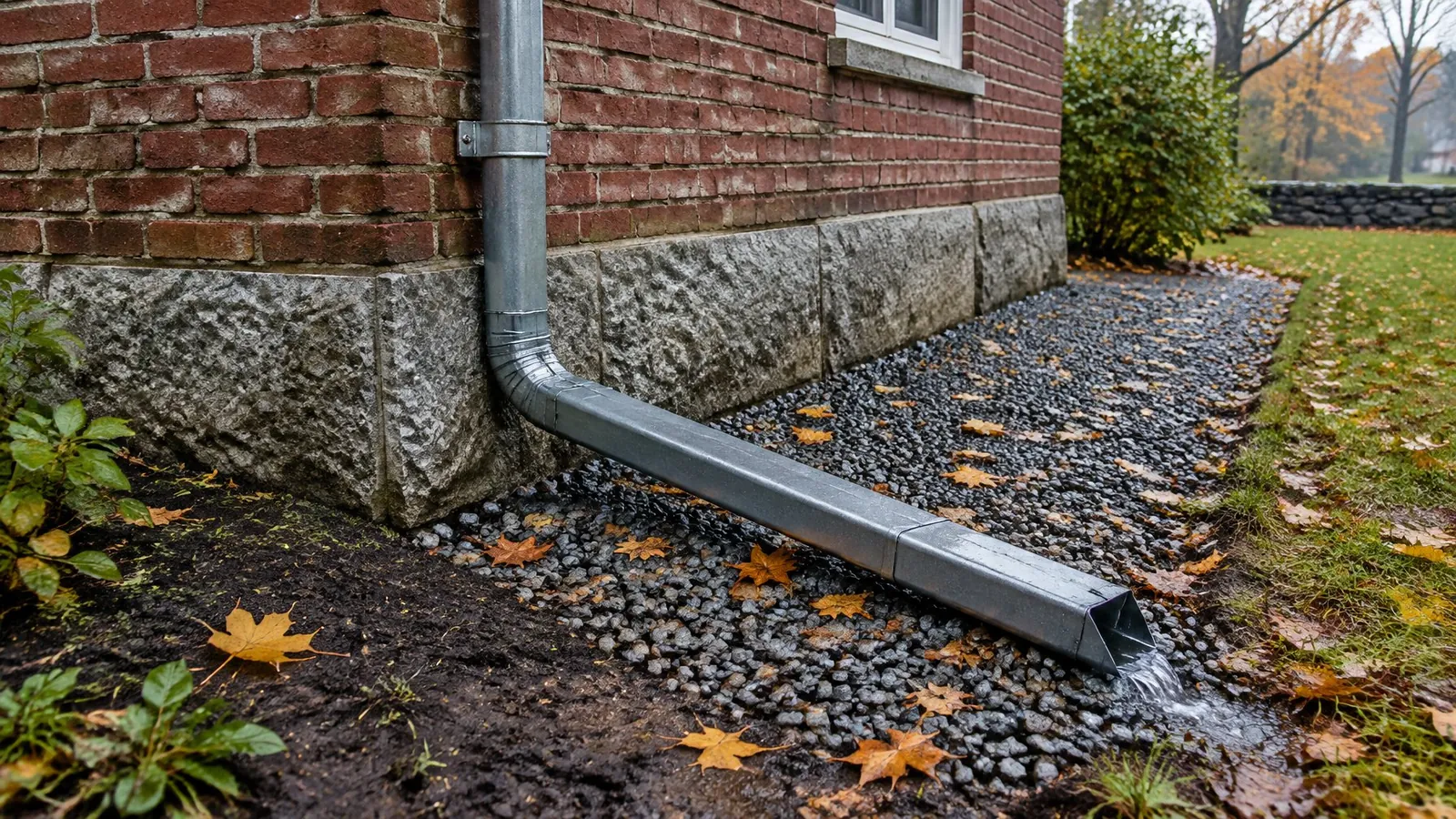
Late fall: gutters and downspouts
Clean the gutters once the leaves are down. Run a hose through each downspout and see where the water ends up. It should leave the pipe a good few feet from the wall and keep going.
Winter: snow and ice
Do not pile shoveled snow against the house, where it will melt into the soil beside the foundation. Look for icicles and ice dams, which show where gutters are blocked.
Spring: walk the basement
After the thaw, look along the base of every wall for damp, new white deposits or fallen mortar. Check your marked cracks against last year's photos.
Summer: ground and mortar
Top up soil that has sunk beside the wall so it slopes away again. Have open joints in stone or brick repointed while the weather is dry.
Keep a record
A crack log takes five minutes a year
Pick the three or four cracks that concern you. Photograph each one with a ruler held across it and the date written on a slip of paper in the frame. Store the pictures in one folder.
Add a few level readings on the floors and, in the basement, the gap between a long level and any wall you think is leaning. If you ever do need an inspection, this record answers the first question you will be asked: is it still moving?
Habits worth having
Small things that prevent large ones
- Keep soil and mulch a hand's width below the siding
- Clear window wells and basement stair drains
- Repair a dripping outside faucet promptly
- Plant large trees well away from the house
- Leave basement posts and beams alone during renovations unless an engineer has approved the change
- Ask before adding a heavy load such as a hot tub or masonry on an old porch
Filled land
One extra rule for pile-supported houses
On Boston's filled land the usual advice about keeping water away is turned around. Wood piles last as long as they stay wet. The Boston Groundwater Trust notes that even a small sump pump can lower the groundwater under your lot and your neighbors'.
If your building is in one of those districts, talk to the Trust or an engineer before installing a pump or a drain that carries groundwater away, and look at the readings from the observation wells near you once in a while.
Foundation repair in Boston
Have a Boston foundation company take a look
Give the street, the kind of building and what has changed. The company settles a day to visit, and afterwards you receive its written account of the cause and what it would charge.
Ready to have it looked at?
Phone and say what you have seen. The firm on the other end is a Boston-area foundation repair company, independent of this website, and it can book a visit to your home.
Call (617) 555-0111You speak with an independent company, not with this website. See the referral disclosure.