Warning sign
Foundation crack repair in Boston basements
Boston basements are built of at least five different materials, and each one cracks in its own way. Start by working out which wall you have.
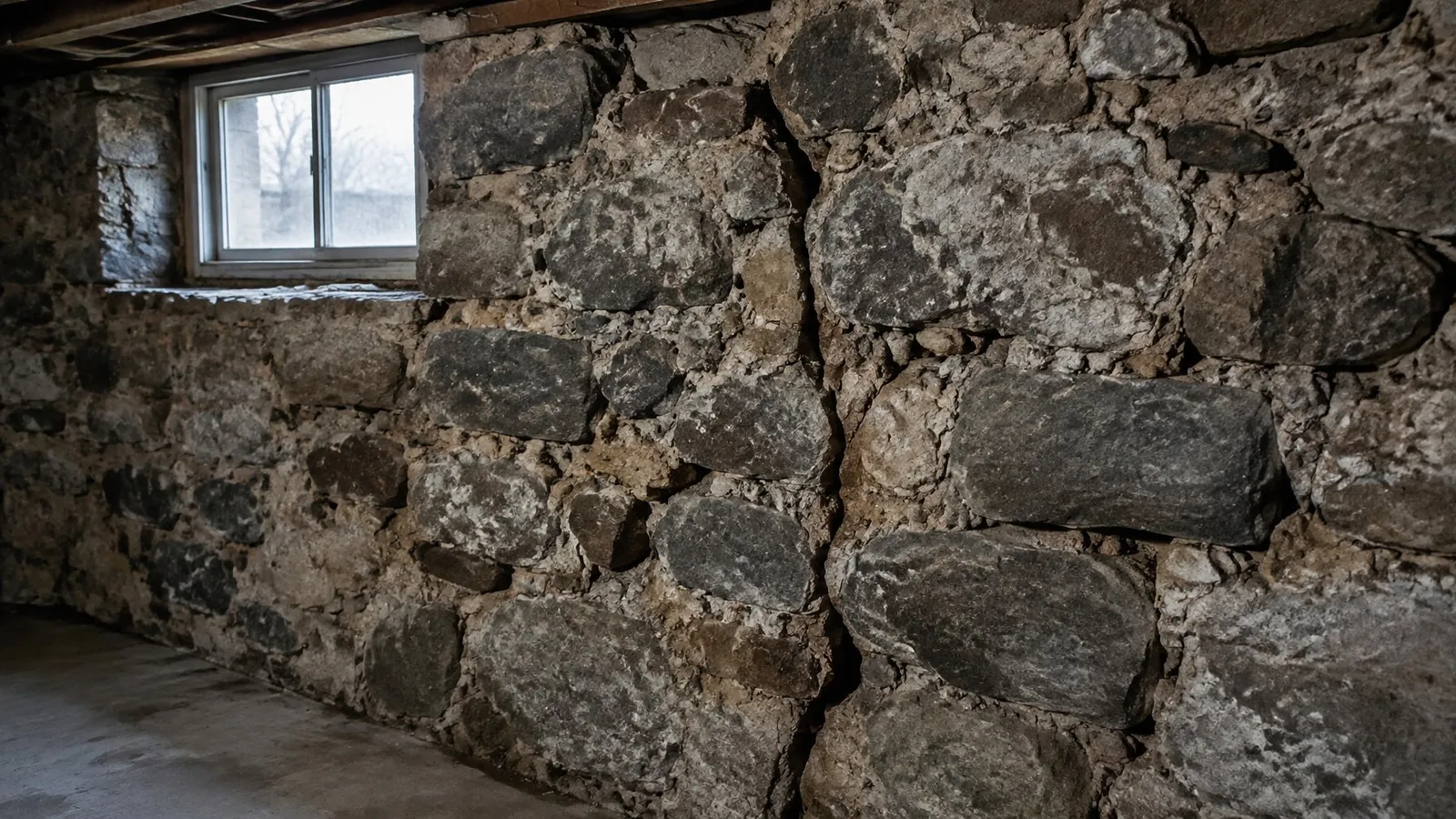
Know your wall
How each kind of foundation shows trouble
| Wall | What you see when it ages | What is worth an inspection |
|---|---|---|
| Fieldstone or rubble | Sandy mortar falling out, white powder on the stones, small stones loose at the base. | A section that bellies inward, stones that have shifted out of line, daylight or soil showing through. |
| Cut granite block | Open joints between large blocks, usually at the top courses near ground level. | Blocks that have slid or rotated, or a joint that is wider at one end than the other. |
| Brick | Soft, crumbling faces and recessed joints where damp has worked on the wall. | Stair-step cracks, a bulge, or a vertical split near a corner. |
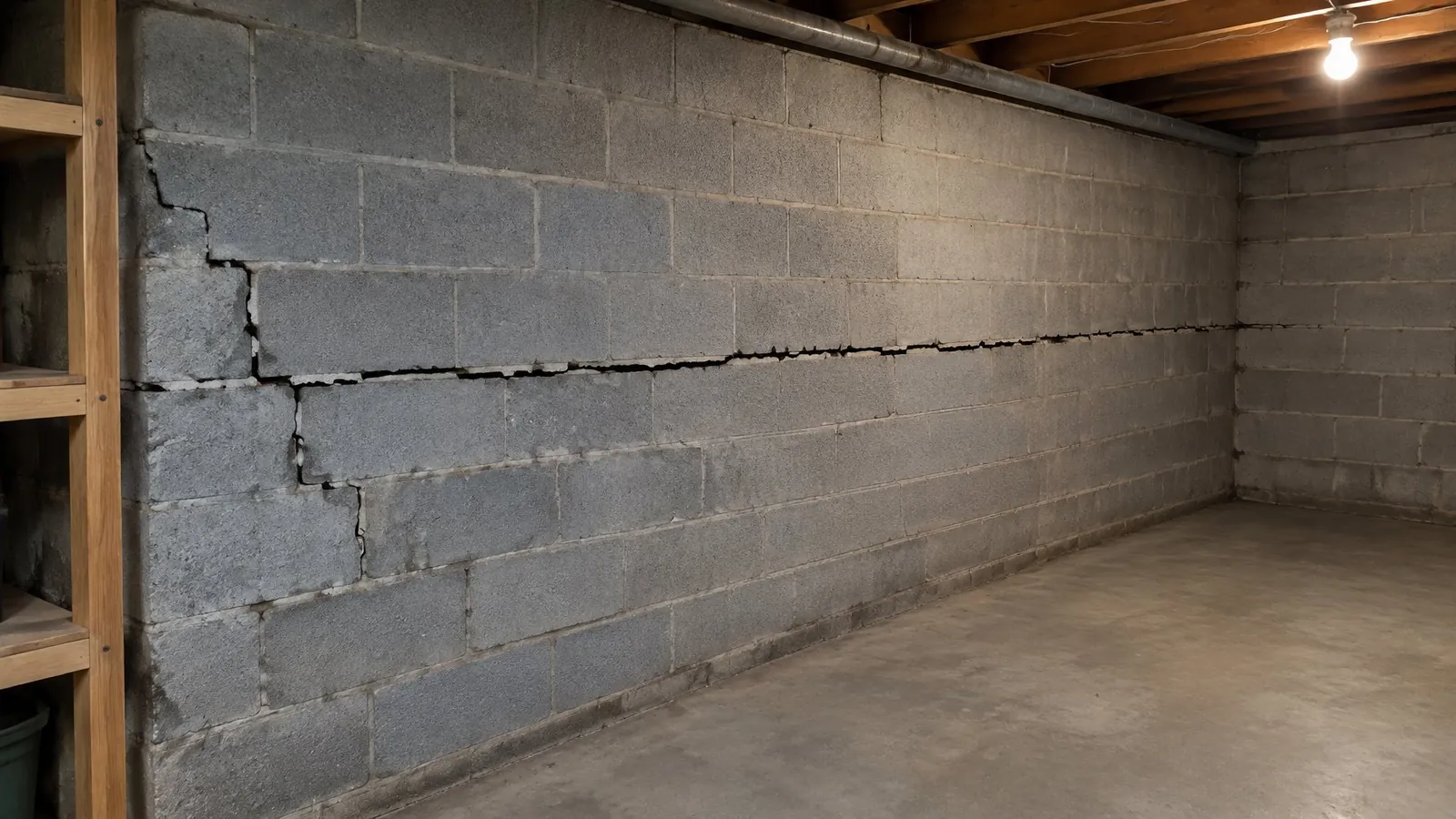
| Concrete block | Hairline cracks along the joints and damp patches after rain. | A horizontal crack at mid-height, stepped cracks at corners, or a course pushed inward. |
| Poured concrete | Thin vertical cracks, often near the middle of a wall or below a window. | A crack that is wider at the top than the bottom, or where one side stands proud of the other. |
A horizontal crack with the wall leaning in is covered on its own page: bowing basement walls.
What a crack can and cannot tell you
Width, offset and direction
Three measurements matter more than length. Width, and whether it changes from one end to the other. Offset: run a finger across the crack, and if one face sits ahead of the other the wall has moved sideways as well as apart. Direction: vertical, diagonal, stepped or horizontal.
A thin vertical crack of even width in poured concrete is very often shrinkage from when the wall cured. A tapered or offset crack suggests that part of the wall has settled or been pushed. None of this is a verdict on your house. It is a way to describe what you see when you call.
At the inspection
What a company checks
Each crack is measured with a gauge and photographed. The inspector looks for staining that shows how long water has been coming through, checks the outside face of the wall where it can be reached, and compares the crack with the floors and walls directly above.
With stone and brick walls a good part of the inspection is done with a screwdriver: probing how deep the mortar has decayed and whether the wall is still solid behind its surface. Where earlier patches have cracked again, that is noted too, because it shows the movement did not stop.
Possible repairs
What foundation crack repair can involve
The right repair depends on why the crack formed. A company may propose one of these or a combination.
Poured concrete
Injection
A crack that has stopped moving can be filled from inside under pressure. Epoxy bonds the two faces. Polyurethane foam stays flexible and is used mainly to keep water out.
Stone and brick
Repointing or rebuilding
Decayed mortar is raked out and replaced. Sections that have bulged or lost stones are taken down and relaid. On old walls the mortar has to suit the original, which is softer than modern cement.
Any wall
Support below or bracing behind
If the crack comes from settlement, the wall is carried on piers before it is sealed. If it comes from soil pressure, the wall is braced. Sealing alone does not stop either.
Questions about foundation cracks
Water comes in through the crack when it rains. Is that a foundation repair?
It depends on whether the wall has moved. A stable crack that only leaks is a water problem, and keeping a basement dry is the work of a basement waterproofer, which is a separate trade. If the crack is also widening, offset or stepped, start with a foundation inspection.
Can a fieldstone foundation be repaired, or does it have to be replaced?
Stone walls are normally repaired, by repointing and by rebuilding the sections that have weakened. Replacing a whole wall is a much larger job and is proposed only when little of it is sound. An inspection will show how much is.
Someone already sealed this crack and it has opened again. What does that mean?
It usually means the cause was never dealt with. Tell the company about the earlier repair, when it was done and by whom if you know. A patch that has cracked is useful evidence.
Foundation repair in Boston
Have a Boston foundation company take a look
Give the street, the kind of building and what has changed. The company settles a day to visit, and afterwards you receive its written account of the cause and what it would charge.
Ready to have it looked at?
Phone and say what you have seen. The firm on the other end is a Boston-area foundation repair company, independent of this website, and it can book a visit to your home.
Call (617) 555-0111You speak with an independent company, not with this website. See the referral disclosure.